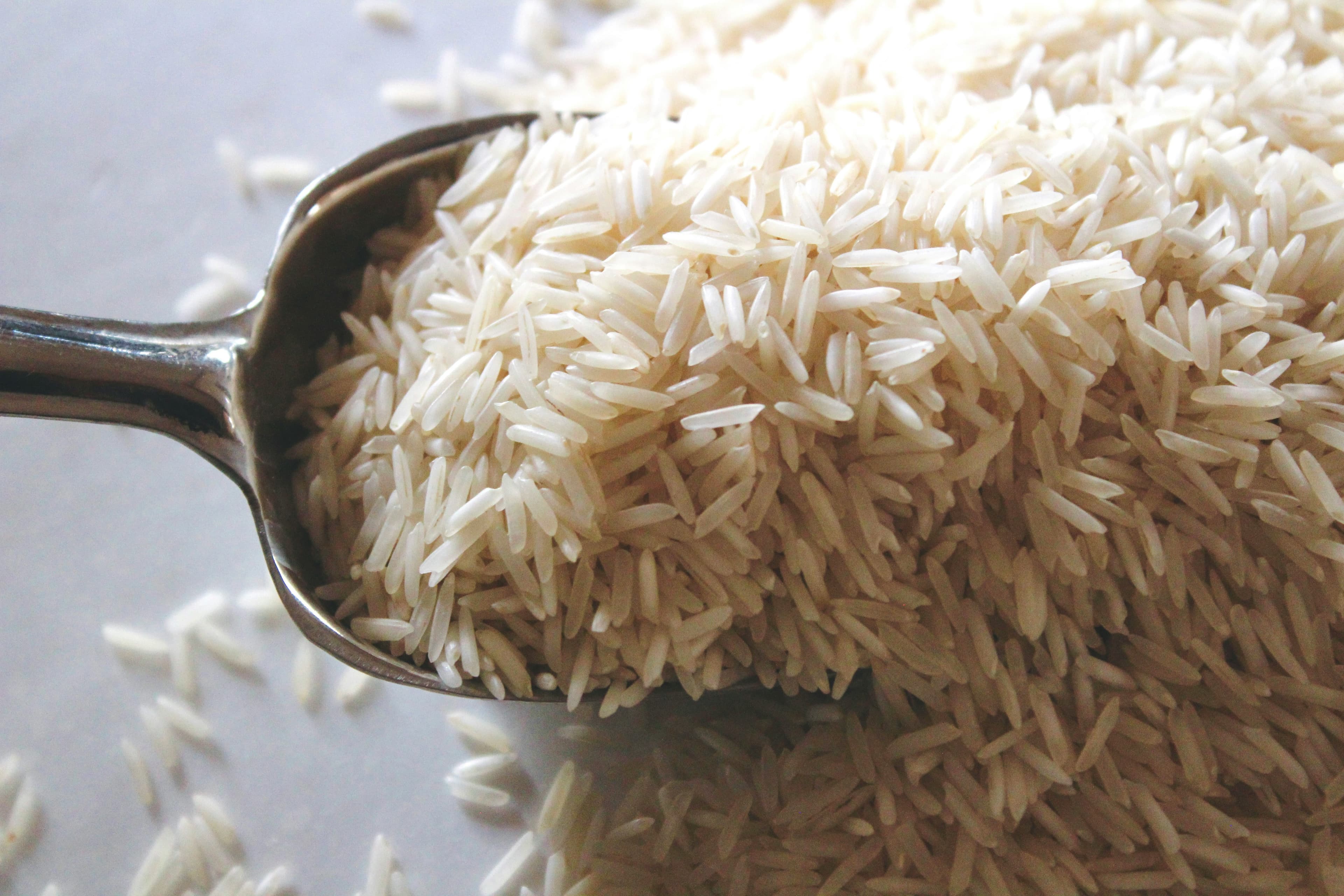
India is the world's largest rice exporter, shipping both premium aromatic basmati and high-volume non-basmati rice. Basmati commands premium prices and strict quality/ageing requirements; non-basmati is price-sensitive, traded in bulk and dominated by African and Middle-Eastern demand. Importers should choose based on end-use (retail packs vs bulk industrial), price sensitivity, regulatory limits (pesticides, MRLs, phytosanitary), and logistics (container sizes, packaging, shelf-life).
1) Quick Market Snapshot
Basmati exports (FY 2024–25): India's basmati exports were ~₹50,312 crore (≈ USD 5.87 billion) with export volumes rising Y/Y. This shows basmati's high revenue share despite being lower volume than non-basmati.
Non-Basmati exports (FY 2024–25): Non-basmati is the bulk of India's rice tonnage exported. APEDA dashboards show non-basmati export volumes measured in millions of tonnes with much lower average export price per tonne (examples of 5% broken export price at roughly USD 350–380/MT in 2025).
- Basmati Markets: Saudi Arabia, UAE, USA, Iraq, Iran (premium retail and HORECA/ethnic markets)
- Non-Basmati Markets: African nations (Benin, Guinea, Senegal, Togo), Middle East and parts of SE Asia
2) Fundamental Agricultural & Grain Differences
Basmati Rice:
- Long-grain, extra long after cooking (grains elongate rather than widen)
- Distinct nutty-floral aroma (due to 2-acetyl-1-pyrroline — 2AP)
- Typically amylose content ~19–27% giving separate, fluffy grains when cooked
- Requires ageing (months) to develop aroma and cooking characteristics
Non-Basmati Rice:
- Wide range: short, medium, long; includes parboiled, sella, steamed and raw white
- Aroma usually neutral (except fragrant non-basmati like jasmine)
- Amylose content variable; texture ranges from sticky to firm
- Harvest-to-export cycles are faster — fresh arrivals can depress prices seasonally
3) Price & Value: What Importers Pay
Typical Price Bands (2024–2025):
Basmati (retail/packable grades): ~USD 900–1,300/MT
Non-Basmati (5% broken/bulk): ~USD 330–420/MT
What Moves Prices:
- Crop season/fresh arrivals (kharif arrivals depress non-basmati prices)
- Freight rates and port congestion
- Currency movement (INR vs USD) and export incentives/taxes
- Grade, ageing (for basmati), broken percentage and moisture content
4) Quality Parameters Importers Should Insist On
- Grain length (mm): Basmati has minimum length norms; check supplier COA
- Broken %: e.g., 5% broken is common standard for non-basmati export grade
- Moisture %: Typically 12–14% max for safe shelf life
- Foreign matter % and admixture: Typically <1% or as agreed
- Damaged/Discolored kernels %: Specify acceptable limits
- Pesticide MRL certificates: To meet importing country's food safety limits
- Mycotoxin/Aflatoxin & Heavy metals: Include testing if buyer country requires
- Ageing certificate: Required for premium basmati specifications
5) Regulations & Documentation Every Importer Must Check
- Phytosanitary Certificate (issued by exporting country's plant health authority)
- Certificate of Origin (for preferential tariff treatment)
- Quality/COA from recognized lab
- APEDA/DGFT documentation and export license checks
- Food safety approvals (EU/US/GC/MS as applicable)
- Labeling & packaging compliance per destination
6) Packaging, Logistics & Shelf Life
Basmati is usually sold in consumer retail packs (1–25 kg) and needs careful handling to preserve aroma. Vacuum/laminated pouches and polywoven bags with inner liners are common.
Non-Basmati is often shipped in 25–50 kg PP bags (bulk) or in jumbo bags/containers for industrial buyers.
Shelf life: At ~12% moisture and good packaging, rice can store 12–24 months. Choose FCL/LCL based on MOQ, local handling, and port discharge capabilities.
7) Country & Market Nuances
- Middle East & GCC: Strong demand for premium basmati for retail and HORECA; also buys parboiled & non-basmati
- Africa (West & Central): High demand for non-basmati (affordable staple rice); price and supply reliability are paramount
- USA & EU: Niche/retail markets for premium basmati with strict food safety/label rules
8) Risk Factors Importers Must Monitor
- Price volatility due to new crop arrivals, weather or geopolitics
- Regulatory changes (MRLs, import bans or additional testing requirements)
- Logistics disruption — port congestion, container shortages and freight spikes
- Adulteration/mislabeling risks — insist on independent lab tests
- Currency risk (INR fluctuations) — consider FX hedging or price clauses
9) Practical Buying Checklist for Importers
- Product description (Basmati/Non-Basmati variant + local variety name)
- Grade & broken % (e.g., Basmati 1121, 5% broken)
- Contract price basis: FOB/CIF/CFR (clearly stated)
- Quantity & MOQ (MT), tolerance (+/- %)
- Packing details (kg per bag, burlap/pp bag, cartons)
- Specs: moisture, broken %, foreign matter %, damaged kernels % and COA
- Pre-shipment inspection: third-party SGS/Intertek required?
- Docs required: Phytosanitary, COO, COA, packing list, invoice, Bill of Lading
- Payment terms: LC/T/T/Open account + incoterm details
- Insurance responsibility & claim handling clause
10) Sourcing Tips: Best Combination of Price, Quality & Reliability
For Basmati: Prefer exporters who can prove ageing, provide CIQ/COA from accredited labs and have retail packing experience. Ask for sample lots and cooking tests.
For Non-Basmati: Focus on supply consistency, timely loadings and flexible packaging. Check supplier's vessel/port track record.
Pro Tip: Use small test shipments first. Start with a container order and scale once QC and delivery reliability are proven. Negotiate freight & demurrage clauses to avoid unexpected port charges.
11) Example Cost Model (Illustrative)
For a CIF shipment to West Africa (per metric tonne, indicative):
- Non-Basmati 5% broken: USD 360 (FOB) + USD 60–120 freight/insurance = CIF ≈ USD 420–480/MT
- Basmati mid-grade: USD 1,050 (FOB) + USD 60–120 freight = CIF ≈ USD 1,110–1,170/MT
12) Recent Trends (2024–2025 Context)
- India remains the largest global rice exporter with rising share in both basmati and non-basmati
- Price softening for non-basmati during fresh arrivals (kharif) in 2025
- Watch trade policy headlines: anti-dumping or tariff discussions can affect buyer sentiment
13) Quick FAQ
Q: Is basmati always better?
A: No — basmati is premium and ideal for retail/HORECA; non-basmati is better for price-sensitive mass markets and industrial/processing uses.
Q: How much should I pay attention to ageing for basmati?
A: A lot — aged basmati (6–12+ months) usually cooks fluffier and fetches higher price; insist on ageing evidence for premium orders.
Q: Can I blend basmati and non-basmati?
A: Blending is uncommon for retail premium claims and could breach labeling rules. For industrial uses, blending may be done but must be declared.
14) Final Checklist Before Signing
- Ask for pre-shipment sample and do cooking test
- Require third-party pre-shipment inspection (SGS/Intertek) and COA
- Lock freight/insurance (CIF contracts) or clarify responsibilities (FOB)
- Confirm MRL/pesticide test limits acceptable for your market
- Get clear packing & palletization specs to avoid demurrage and damage
India accounts for approximately 40% of global rice trade, making it a crucial player in ensuring food security across nations. Whether you choose premium basmati or cost-effective non-basmati, proper due diligence ensures successful imports.